


Could your traditional stone patio be the very thing holding your garden back from its full potential? For many Hampshire homeowners, the dream of installing porcelain patios often stems from a desire to escape the cycle of scrubbing green algae and resetting uneven slabs. You’ve likely spent too many weekends power-washing natural stone only to see the stains return just a few weeks later. At Helyers, we believe your garden should be a place of rest, not a source of endless chore cycles.
Choosing porcelain is the most effective way to reclaim your time while elevating your home’s aesthetic. In this 2026 guide, you’ll discover how these precision-engineered slabs provide a safe, R11 anti-slip surface that resists the damp UK climate. We’ll preview the technical requirements for a lifetime of durability, including the British Standard 1:50 drainage fall and the 150mm clearance needed below your damp proof course. From large-format 1200x600mm slabs to seamless indoor-outdoor transitions, we’ll show you how a professional installation transforms your Hampshire garden into a modern, high-performance living environment.
Key Takeaways
- Learn why vitrified ceramic fired at 1200°C creates a high-density surface. It consistently outperforms traditional sandstone in the Hampshire climate.
- Understand the technical advantages of modern porcelain patios, specifically how R11 slip-resistance ratings provide a safe environment for your family.
- Discover the “inside-out” design trend. We use matching tiles and large-format slabs to blend your indoor living area seamlessly with your garden.
- See why the Helyers approach to installation is vital for handling Hampshire’s heavy clay soils. This prevents shifting and ensures your patio stays level for decades.
- Find out how 3D garden design takes the guesswork out of your project. You’ll visualize every detail of the transformation before construction starts.
Why Porcelain Patios are the Modern Standard for Hampshire Gardens
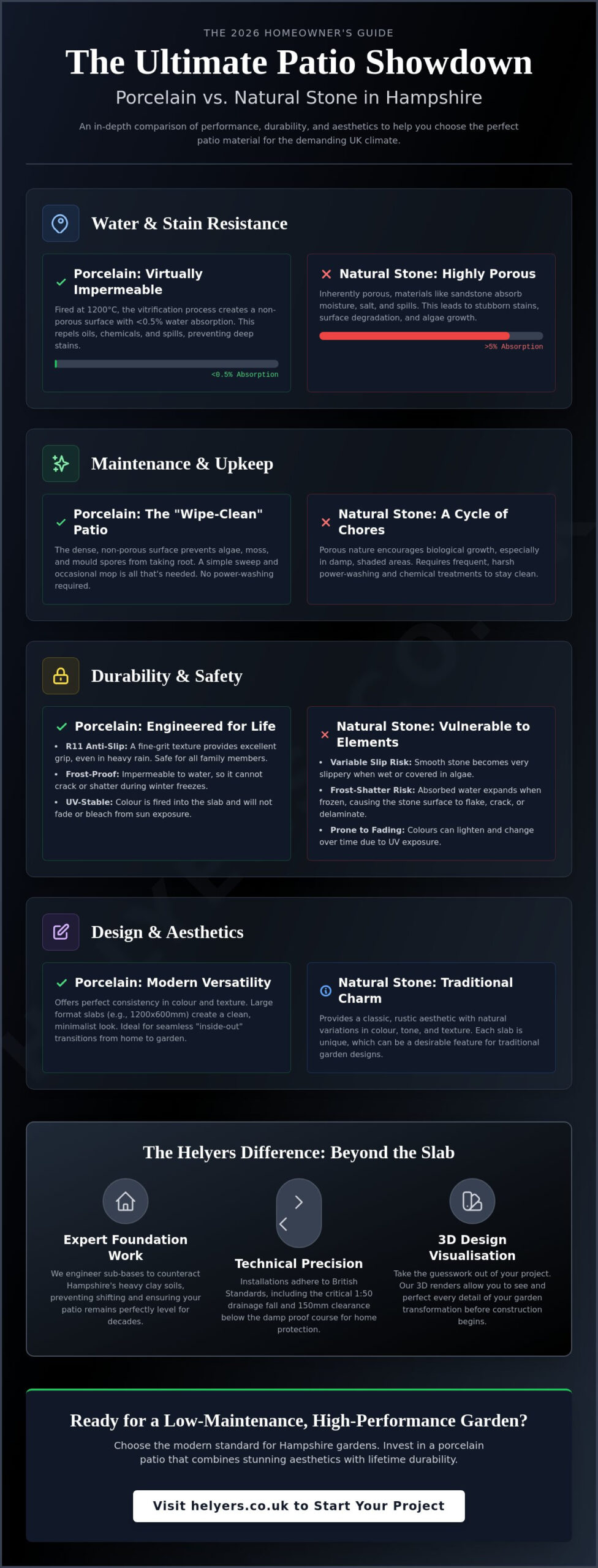
In 2026, the landscape of Hampshire gardens is changing. Homeowners are increasingly moving away from traditional materials like concrete and natural stone. They’re choosing porcelain patios for their unique blend of durability and high-end aesthetics. Unlike standard ceramic tiles, outdoor porcelain is a vitrified material fired at temperatures reaching 1200°C. This intense heat creates an extremely dense slab that can withstand heavy foot traffic and the weight of garden furniture without cracking or chipping.
While many residents previously opted for Indian sandstone patios, porcelain offers a structural advantage that natural stone cannot match. Natural stone is inherently porous; it absorbs water, oils, and spills. In coastal areas like Portsmouth and Southampton, the salt-laden air can penetrate natural stone, leading to surface degradation over time. Porcelain slabs are non-porous, meaning they’re completely unaffected by salt air or mineral deposits. This ensures your investment retains its pristine finish even in exposed maritime environments.
The Vitrification Advantage
The secret to the longevity of these slabs lies in the manufacturing process. During production, the clay and minerals are compressed under immense pressure before firing, which eliminates internal air pockets. Vitrification is the process that renders porcelain 99.9% waterproof. Because it absorbs virtually no moisture, it meets the highest technical standards for porcelain regarding water absorption (ISO 13006). This is a critical feature for Hampshire’s winter months. When water gets trapped inside traditional paving and freezes, it expands and causes the stone to flake or shatter. Porcelain is immune to this frost-shattering, giving you a surface that remains structurally sound for decades.
A Solution for the South Coast Climate
Residents in Fareham and Gosport often deal with damp, humid weather patterns that encourage biological growth. If your garden has shaded areas or north-facing corners, you’ve likely battled green algae and moss on your old patio. Porcelain’s dense surface prevents spores from taking root. You won’t need to spend your weekends with a pressure washer; a simple sweep and occasional mop are usually enough to keep it looking new.
Beyond moisture resistance, these slabs are exceptionally stable under sunlight. Traditional materials often fade or “bleach” after a few years of exposure to UV rays. Modern porcelain is UV-stable, meaning the rich anthracite or warm beige tones you choose today will look exactly the same ten years from now. It’s a practical, hardworking solution for homeowners who value aesthetic excellence without the burden of constant maintenance.
Performance Comparison: Porcelain vs. Natural Stone
When you’re investing in a new garden surface, technical performance matters just as much as visual appeal. While natural stone has been the traditional choice for decades, it often struggles with the practical demands of modern family life. Porcelain patios represent a significant shift in outdoor engineering. They offer a level of consistency and durability that sandstone or limestone simply can’t match. By choosing a manufactured material, you’re opting for a product that meets strict industry standards for porcelain, including high breaking strength and chemical resistance.
Slip Resistance and Safety
One common myth we hear from Hampshire homeowners is that porcelain is slippery when wet. The reality is quite the opposite. Most high-quality outdoor porcelain slabs carry an R11 anti-slip rating, which is the gold standard for UK gardens. This rating means the surface has a subtle, fine-grit texture that provides excellent grip underfoot, even during a heavy South Coast downpour. It’s often safer than wet timber decking or smooth slate, which can become treacherous as algae builds up. For families with young children or elderly relatives, this slip resistance provides essential peace of mind without compromising the sleek, modern look of the garden.
Maintenance: The Wipe-Clean Patio
The most striking difference between materials is the long-term maintenance requirement. Natural stone is porous; it acts like a sponge, soaking up water, dirt, and organic matter. To keep stone looking its best, you typically need to apply a chemical sealer every 12 to 24 months. Porcelain requires zero sealing. Because the surface is vitrified and non-porous, stains from red wine, BBQ grease, or fallen leaves don’t penetrate the slab. They sit on top, ready to be wiped away.
- Cleaning: You don’t need specialist chemicals. A simple jet wash or a bucket of soapy water is enough to restore the “day one” finish.
- Scratch Resistance: The extreme density of the material makes it highly resistant to scratches from dragging heavy garden furniture or fire pits.
- Impact: Porcelain handles high-impact use with ease, making it a reliable choice for bespoke driveways and patios where load-bearing capacity is vital.
This durability ensures your outdoor space remains a place of relaxation rather than a list of chores. If you’re looking to achieve this level of low-maintenance luxury, our team can help you select the perfect finish through our professional landscaping services. By focusing on these technical advantages, porcelain patios deliver a lifetime of value that traditional stone struggles to provide.
Design Versatility: Finding Your Style in 2026
The most significant trend we’re seeing in 2026 is the “Inside-Out” transition. Homeowners are no longer viewing their garden as a separate entity but as a direct extension of the kitchen or lounge. By matching interior floor tiles with outdoor porcelain patios, you create a visual bridge that makes both spaces feel larger. We often recommend large-format slabs, such as 900x600mm or 1200x600mm, to achieve this effect. These oversized units minimize the number of grout lines, resulting in a cleaner, more expansive aesthetic that suits modern Hampshire architecture perfectly.
Our colour palettes for this season reflect the local landscape. We’re installing deep Winchester greys for contemporary urban gardens and soft Chichester creams for more traditional, flint-walled properties. These choices aren’t just about fashion; they’re about choosing a tone that complements the natural light and existing masonry of your home. By adhering to American National Standard specifications, manufacturers ensure these tiles aren’t just beautiful but structurally sound and consistent in colour across every batch.
Modern vs. Traditional Aesthetics
Not every porcelain patio needs to look like a high-end gallery. In Fareham, we’ve completed several transformations using concrete-effect porcelain to anchor minimalist, industrial designs. For those who love the warmth of timber but hate the maintenance of wood, wood-effect porcelain is a revelation. It provides the grain and texture of decking with the durability of stone. If you prefer a rustic feel, textured stone-effect slabs mimic the riven surface of natural slate or limestone while providing the superior performance you’d expect from a precision-engineered product.
Layouts and Patterns
The technical precision of porcelain allows for design details that natural stone can’t support. We typically use narrow 3mm grout lines, which require expert installation but offer a far superior finish to the wide, uneven joints seen in older paving. You can choose a classic stretcher bond for a timeless look or a linear pattern to draw the eye toward a specific focal point, such as a water feature or a bespoke seating area. This versatility extends beyond the floor; we frequently use the same material for steps, wall cladding, and even planter boxes, integrating your patio into a cohesive garden design in Hampshire.
Using 3D design technology, we help you visualize how these different patterns and colours will interact with your home’s existing features. This ensures that the final result isn’t just a new surface, but a life-enhancing change to your outdoor living environment.
Professional Installation: The Helyers Difference
Installing porcelain patios is a task that requires significantly more precision than laying traditional concrete or sandstone. While natural stone is forgiving due to its varied thickness and porous nature, porcelain is a precision-manufactured product with zero tolerance for error. If the groundworks aren’t perfect, the rigid nature of the slabs will highlight every flaw. This is why hiring specialist paving contractors is the only way to guarantee a finish that remains level and secure for decades.
In Hampshire, our teams frequently deal with heavy clay soils. This type of ground is notorious for expanding and contracting based on moisture levels, which can cause inferior patios to shift or sink. We combat this by installing a substantial, compacted sub-base of Type 1 MOT. We never use the “dot and dab” method, which involves placing slabs on small mounds of mortar. This shortcut leaves hollow voids under the tiles where water can collect, leading to structural failure and unsightly “picture framing” stains. Instead, Helyers uses a full wet bed of mortar to ensure 100% surface contact and support.
The Priming Slurry Secret
Porcelain will not bond to mortar without a SBR priming slurry. Because the material is non-porous, it cannot form a mechanical bond with the sand and cement bed like natural stone does. The priming slurry acts as a chemical bridge, fused to the back of the tile to create a permanent link between the slab and the mortar bed. At Helyers, we treat the application of this slurry as a critical step, not an optional extra. This ensures that your slabs won’t work loose over time, even with the vibration of heavy garden furniture or temperature swings.
Drainage and Groundworks
Managing water runoff is the most technical aspect of any landscaping project. Because porcelain doesn’t absorb water, every drop of rain must be directed away from your home. We incorporate a minimum 1:60 fall into every design, ensuring water flows naturally toward a lawn or a dedicated drainage system. This prevents pooling, which can be a slip hazard and look untidy.
We also pay strict attention to local building regulations regarding your home’s damp proof course (DPC). Your new patio surface must sit at least 150mm below the DPC to prevent moisture from bridging into your internal walls. Our team integrates linear drains and soakaways where necessary, providing a robust solution that protects your property. If you’re ready to upgrade your garden with a technically perfect installation, you can contact our landscaping team to discuss your project requirements.
Transforming Your Outdoor Space with Helyers of Hampshire
A garden transformation is a significant investment in your home’s value and your daily quality of life. At Helyers, we understand that choosing between different porcelain patios involves more than just picking a colour from a brochure. It requires a partner who manages every technical detail, from the initial site survey to the final sweep of the site. We’ve built our reputation as the preferred choice for professional patio construction in Southampton by combining high-end craftsmanship with a transparent, reliable process.
Our approach is methodical and disciplined. We start with a comprehensive consultation to understand how you intend to use the space. Whether you’re looking for a sleek area for entertaining or a safe, slip-resistant zone for a growing family, we tailor the structural specifications to match. This grounded approach ensures that the finished product isn’t just aesthetically pleasing but is built to endure the specific environmental challenges of the South Coast.
Bespoke Design and 3D Planning
Visualizing how a new surface will look against your existing architecture can be difficult. To bridge this gap, we provide a sophisticated 3D design service. For a homeowner in Fareham, this means seeing exactly how a charcoal porcelain slab interacts with the red brick of their property before construction begins. This 3D model allows us to experiment with different layouts and colour palettes in real-time.
We don’t view the patio in isolation. Our design process integrates essential elements like bespoke garden lighting to highlight the texture of the slabs at night and strategic planting plans that soften the clean lines of the porcelain. This ensures your new porcelain patios feel like a natural, integrated part of the landscape rather than an afterthought. We adjust every detail to complement your property’s specific architectural style, ensuring a cohesive look from the back door to the garden boundary.
Your Local Hampshire Landscaping Partner
Helyers is a family-owned business with deep roots in the local community. We serve a wide range of residential and commercial clients across the region, from the historic streets of Winchester to the coastal properties of Chichester. This local expertise is vital; we understand the ground conditions and weather patterns unique to this part of the country. Our size allows us to handle complex, large-scale landscaping projects while maintaining the personal touch and attention to detail required for a single garden transformation.
We take immense pride in our work, treating every project as a showcase of our craftsmanship. Our teams are disciplined, respectful of your property, and focused on delivering results that exceed expectations. If you’re ready to move away from high-maintenance stone and embrace the luxury of modern outdoor living, we’re here to help. Contact Helyers for a consultation today, and let’s begin the process of transforming your garden into a durable, beautiful retreat.
Secure Your Garden’s Future with High-Performance Paving
Investing in porcelain patios is a decision that pays dividends in both home value and reclaimed leisure time. You’ve seen how the R11 anti-slip rating and vitrified density solve the common problems of algae growth and frost damage that often plague traditional stone. By choosing a surface that requires zero annual sealing, you’re ensuring your outdoor space remains a place of relaxation rather than a list of chores. It’s a structural solution designed to handle the Hampshire climate with ease.
At Helyers, we bring over 20 years of Hampshire landscaping expertise to every project. Our specialist 3D design service allows you to explore every layout and colour option with total confidence before the first slab is laid. Our expert installers understand the technical requirements of vitrified porcelain, from the chemical bond of priming slurry to the precision of a 1:60 drainage fall. We’re ready to help you create a durable, low-maintenance environment that looks new for decades.
Book Your Hampshire Porcelain Patio Consultation Today and take the first step toward a total garden transformation. We look forward to helping you realize the full potential of your outdoor space.
Frequently Asked Questions
Is porcelain paving more expensive than sandstone?
Porcelain material costs typically start around £45 per square meter for mid-range quality in 2026. While natural sandstone often has a lower initial purchase price, porcelain’s total cost of ownership is lower because it doesn’t require annual sealing or intensive chemical cleaning. You’re investing in a surface that maintains its appearance for 25 years or more without the degradation typically seen in porous natural stone.
Does porcelain paving get hot in the summer sun?
Like any hard landscaping material, porcelain absorbs solar energy, but lighter shades stay significantly cooler. If your garden is south-facing, choosing beige or cream tones helps manage surface temperatures during peak summer months. Porcelain’s high density means it releases heat slowly; however, it doesn’t become as hot as dark bitumen or old-fashioned black slate under the same conditions.
Can porcelain paving be used for driveways?
You can use porcelain patios materials for driveways if the slabs are specifically rated for vehicle loads. We install 20mm or 30mm thick slabs on a reinforced concrete base to ensure they handle the weight of modern cars without cracking. This provides a sleek, high-end alternative to traditional block paving while resisting oil stains and tire marks that often ruin other surfaces.
How do you clean a porcelain patio properly?
You only need a bucket of warm, soapy water and a stiff brush for routine cleaning. Because porcelain has a water absorption rate of less than 0.05%, dirt and grime sit on the surface rather than soaking in. For larger areas, a low-pressure jet wash is effective. You should avoid acidic cleaners, as they can damage the grout joints over time.
What is the best grout to use for porcelain patios?
We recommend using a high-performance, polymer-modified grout specifically designed for outdoor porcelain. These products are water-repellent and resistant to mold growth, which is essential for maintaining the narrow 3mm joints we typically install. Using the correct grout ensures the bond remains flexible enough to handle the thermal expansion and contraction of the slabs throughout the Hampshire seasons.
How long does a porcelain patio installation take?
A typical 30 square meter installation usually takes between 7 and 10 working days to complete. This timeline includes the essential groundworks, such as excavating the site and compacting the Type 1 MOT sub-base. Larger projects or those involving complex features like steps and wall cladding may take longer, but we always provide a clear, fixed schedule before our team begins the work.
Is porcelain paving eco-friendly?
Porcelain is a sustainable choice because it’s made from natural raw materials like clay and feldspar. Its extreme durability means it doesn’t need to be replaced as frequently as timber or concrete, reducing the long-term environmental impact of your garden. Additionally, many modern manufacturers now use recycled water and materials in their production processes to meet 2026 industry sustainability standards.
Can porcelain tiles be laid on top of an existing concrete patio?
You can lay porcelain on an existing concrete base if the surface is structurally sound and has no major cracks. We must first ensure the concrete has the correct drainage fall and that the final height of the tiles remains 150mm below your damp proof course. We use a specialized flexible adhesive to bond the slabs directly to the cleaned and primed concrete surface.