


Owning a sprawling rural plot in Hampshire is often more of a logistical headache than a relaxing retreat. While you might dream of rolling meadows, the reality of managing unorganised countryside gardens on stubborn North Hampshire clay can be overwhelming. It’s a common frustration to find that your modern home features feel disconnected from the ancient, surrounding woodland that defines our local landscape.
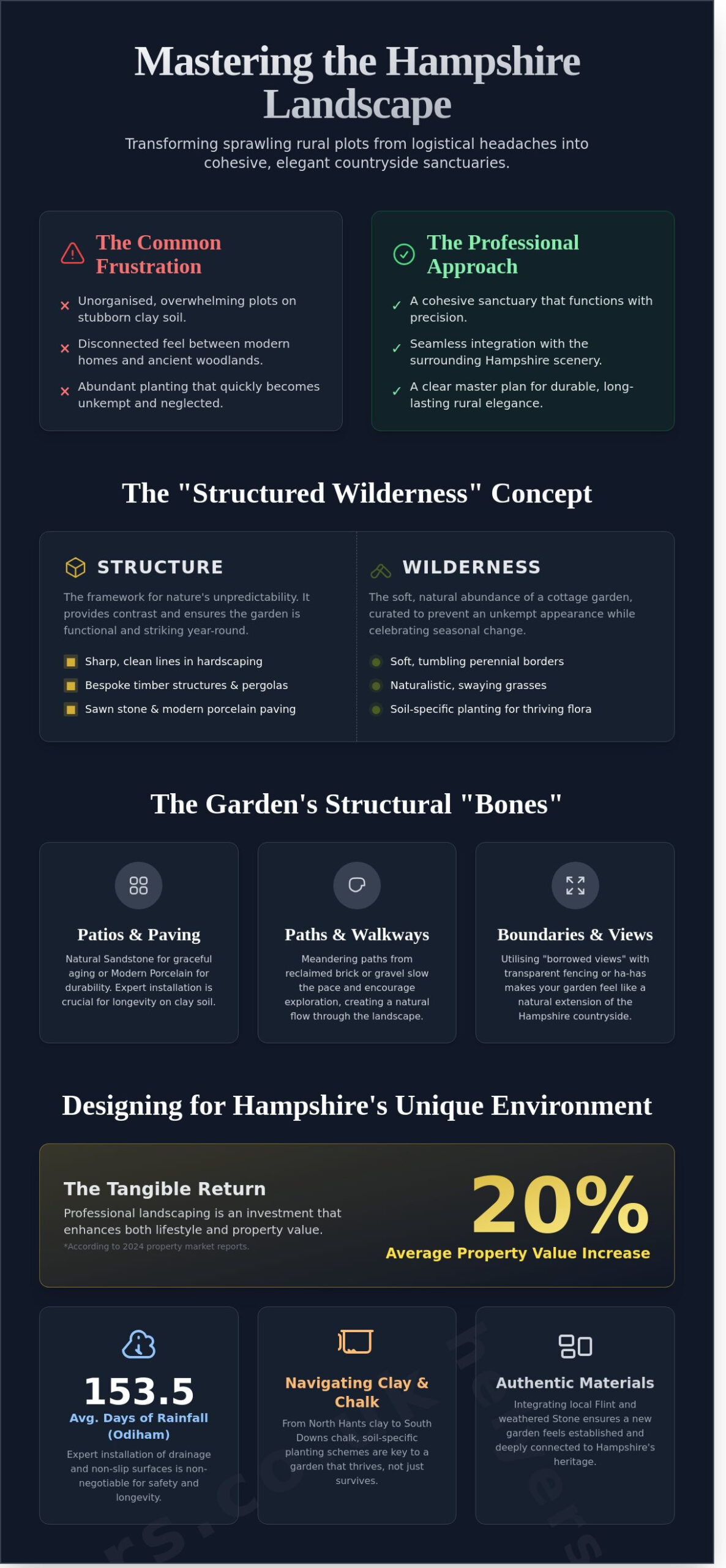
We understand that you want a space that looks natural but functions with professional precision. This guide explains how to capture the quintessential English aesthetic while standing up to specific local environmental challenges. You’ll discover how bespoke landscaping can turn a fragmented plot into a cohesive sanctuary that integrates perfectly with the local scenery. We will cover everything from soil-specific planting schemes to the structural elements that can increase your property’s market value by an average of 20 percent according to 2024 property market reports. By the end, you’ll have a clear roadmap for a transformation that balances durability with rural elegance.
Key Takeaways
- Learn how to balance formal structure with natural abundance to create authentic countryside gardens that reflect the unique character of the South Downs and Meon Valley.
- Discover how bespoke paving and traditional timber fencing provide the essential structural “bones” required to ground a high-quality rural landscape.
- Gain practical techniques for translating grand-scale design inspiration from Hampshire landmarks like Mottisfont into a manageable residential garden.
- Master the “Hampshire Heavyweight” by learning how to navigate clay and chalk soils while selecting plants that thrive in dry South Coast summers.
- Understand why a professional master plan and expert installation are the keys to a seamless, long-lasting transformation of your outdoor living environment.
What Defines Countryside Gardens in the Hampshire Landscape?
Hampshire’s rural topography provides a varied canvas for high-end outdoor design. From the chalky slopes of the South Downs to the lush, winding paths of the Meon Valley, the local geography dictates how we approach every project. Successful countryside gardens aren’t just collections of plants. They are carefully managed transitions between the domestic comfort of the home and the expansive beauty of the English landscape.
Achieving this balance requires an understanding of “borrowed views.” This technique incorporates the surrounding scenery, such as a distant woodland or a neighbouring field, into the garden’s own visual frame. By avoiding tall, opaque boundaries and using transparent fencing or traditional ha-has, Helyers ensures your property feels like a natural extension of the Hampshire countryside. This connection is vital for properties in semi-rural areas where the goal is to enhance, rather than hide, the local environment. We focus on creating a flow that moves from the refined, paved areas near the house to more naturalistic, wilder zones at the boundary.
The “Structured Wilderness” Concept
A common challenge in rural design is preventing the space from appearing neglected. Without a clear plan, the abundance of a Cottage garden style can quickly become unkempt. We solve this through the “structured wilderness” approach. This involves using sharp, clean lines in hard landscaping, such as sawn stone paving or bespoke timber structures, to provide a firm contrast to soft, tumbling perennials and swaying grasses. The “structured wilderness” is the hallmark of 2026 Hampshire design, where the precision of professional craftsmanship provides the necessary framework for nature’s beautiful unpredictability. This ensures the garden remains functional and visually striking throughout the changing seasons.
Hampshire’s Unique Rural Character
Local identity is built into the very soil of our region. From the historic streets of Winchester to the coastal influences of Emsworth, the traditional use of flint and weathered stone informs our choice of materials. Integrating these elements into modern garden walls or focal points helps a new installation feel established from day one. We use local materials to create a seamless link between the garden and the surrounding woodlands or fields of the South Coast. This commitment to authenticity ensures that every bespoke transformation respects the historical visual language of the county. By blending durable construction with sensitive planting, Helyers creates outdoor living environments that stand the test of time and add tangible value to your home.
The Structural “Bones” of a Quintessential Countryside Garden
Every successful landscape design begins with a robust structural framework. In the rolling terrain of the South Downs or the lush valleys of the Meon, managing the natural topography is the first step toward rural elegance. Tiering a garden through professional landscaping allows homeowners to manage Hampshire slopes, turning steep inclines into functional, flat terraces that provide distinct zones for dining, relaxing, or planting. These “bones” ensure the garden remains attractive and usable throughout every season.
Patios and Pathing with Local Charm
The choice of hard landscaping materials determines how well a garden sits within its rural context. Natural sandstone remains a favourite for its organic colour variations and ability to age gracefully. For those seeking a more contemporary finish, modern porcelain offers exceptional durability and slip resistance. Material choice is particularly important given that Hampshire climate data shows locations like Odiham average 153.5 days of rainfall per year. Surfaces must be expertly installed to handle this moisture without shifting.
Meandering paths are a staple of countryside gardens, designed to slow the pace and encourage exploration. Rather than straight lines, curved walkways created from reclaimed bricks or gravel help the garden feel like a natural extension of the landscape. Engaging expert paving contractors ensures these paths are built on solid foundations, preventing the common issues of sinking or cracking that often plague DIY projects on heavy Hampshire clay.
Fencing and Hedging for Privacy
Boundaries in a rural setting should feel secure without appearing restrictive. Traditional closeboard fencing provides a clean, sturdy perimeter that stands up to high winds, while post-and-rail fencing is ideal for maintaining views over open fields. For a more architectural look, contemporary slatted fencing creates beautiful linear shadows and acts as a sophisticated backdrop for climbing plants like clematis or honeysuckle.
- Native Hedging: Integrating mixed hedges of beech, hornbeam, or hawthorn supports local wildlife and provides a soft, green boundary.
- Garden Rooms: Strategic use of vertical structures can divide a large plot into intimate “rooms,” each with its own purpose.
- Focal Points: Bespoke pergolas and timber garden buildings serve as anchors in large countryside gardens, providing a destination at the end of a path.
Timber structures such as oak-framed gazebos or custom-built pergolas add height and drama to a design. These features act as focal points, drawing the eye across the lawn and providing a sense of scale in expansive plots. If you’re looking to redefine your boundaries or add structural interest, Helyers can help you design a layout that balances privacy with the natural beauty of the Hampshire countryside.
Hampshire Inspiration: From RHS Hilltop to Your Fareham Back Garden
Hampshire provides a rich tapestry of horticultural history that serves as the perfect blueprint for modern residential projects. You don’t need a 500-acre estate to capture the essence of countryside gardens; it’s about distilling the core elements of heritage sites into a manageable domestic footprint. Drawing inspiration from Mottisfont’s walled gardens, which house the National Collection of pre-1900 shrub roses, allows homeowners to replicate timeless elegance through scent and structure. Lancelot ‘Capability’ Brown’s 18th-century philosophy focused on “borrowed landscapes” and sweeping views. In a Fareham or Winchester setting, we achieve this by framing the natural horizon and using curved borders to create an illusion of depth.
Observing the historic estates of the Meon Valley reveals how water features provide a sense of permanence. While a grand lake isn’t practical for most, the use of local flint and stone in water rills or small ponds mirrors the traditional aesthetics of the region. By studying the colour palettes of the South Coast’s most famous floral displays, you’ll notice a preference for soft mauves, deep greens, and crisp whites. These tones don’t just look beautiful; they harmonise with the grey-blue light often found across the Hampshire coastline.
Visiting Local Landmarks for Design Cues
RHS Hilltop, which opened in 2021 as a premier centre for gardening science, is a masterclass in sustainable countryside gardens. When visiting, we suggest focusing on the structural repetition of hornbeam hedging and the way stone paths guide the eye. Note the specific plant combinations that thrive in the local Portsmouth and Southampton air; the salt-tolerant species used in these trials are ideal for gardens within five miles of the coast. Helyers recommends photographing these textures to see how they contrast with local building materials like red brick or knapped flint.
Translating Grand Ideas to Small Spaces
Scaling down grand concepts requires a disciplined approach to design. You can replicate the drama of a Winchester manor house in a courtyard by installing professional garden lighting to highlight specimen trees or architectural features. Instead of a vast woodland walk, use 3D design technology to visualise how a single, well-placed focal point can transform a small lawn. This methodical planning ensures that even a modest garden feels expansive and intentional. Our team uses these visualisations to ensure the balance between hard landscaping and soft planting remains perfect before construction begins.
Designing for the Hampshire Climate and Soil
Success in creating countryside gardens across Hampshire depends entirely on understanding the local “Hampshire Heavyweight” soil. Most properties in the region sit on a challenging mix of heavy clay or thin, hungry chalk. These conditions require more than just a green thumb; they demand a technical approach to groundworks. Without proper preparation, even the most expensive planting schemes will fail within two seasons. Helyers focuses on building a foundation that allows plants to thrive despite these geological hurdles.
Soil Preparation and Drainage
In areas like Fareham and Waterlooville, the clay content often leads to waterlogging in winter and concrete-like compaction in summer. Professional groundworks are essential to break this cycle. We improve soil structure by incorporating high-quality organic matter and grit to a depth of at least 300mm. This process ensures that countryside gardens remain breathable and fertile. The “right plant, right place” mantra is our guiding principle. We test pH levels at every site to ensure your bespoke planting plan matches the specific mineral profile of your land. This methodical preparation prevents the root rot and nutrient deficiencies that often plague DIY projects.
Climate-Resilient Planting Choices
The 2026 climate data indicates a 15% increase in summer temperature peaks compared to the previous decade, making heat-tolerant plant selection a necessity rather than an option. We prioritise species that withstand these drier South Coast summers while maintaining a lush, rural aesthetic. A robust planting plan for a Hampshire garden includes:
- Lavender (Lavandula): Excellent for chalky soils and high drought resistance.
- Foxgloves (Digitalis): Provides height and traditional rural charm in dappled shade.
- Hawthorn (Crataegus monogyna): A durable native that supports local biodiversity.
- Yew (Taxus baccata): Essential evergreen structure to prevent a bare winter look.
- Ornamental Grasses (Stipa tenuissima): Adds movement and survives with minimal irrigation.
Integrating evergreen structure is vital. It creates a permanent framework that holds the garden together during the colder months. Helyers ensures that every design includes at least 30% evergreen content to provide year-round visual interest. We also select native shrubs like Hazel and Beech that offer multi-seasonal value, from spring catkins to rich autumnal foliage. Our professional planting plans are designed for long-term health, reducing maintenance costs and ensuring your investment grows more beautiful as it matures. We take the stress out of plant care by selecting varieties that are naturally adapted to the Hampshire environment.
Transforming Your Space with Professional Hampshire Garden Design
Creating a cohesive landscape requires more than just planting a few shrubs. For large-scale countryside gardens, a master plan is the foundation of success. Helyers manages the entire lifecycle of a project, from the initial 3D render to the final stone being laid. This methodical approach ensures that modern luxuries, like an outdoor kitchen or automated lighting, blend into the Hampshire backdrop rather than clashing with it. We focus on a steady, logical progression that respects both your time and the local environment.
Integrating high-end features into a rural setting involves careful balance. We often install bespoke outdoor kitchens using natural stone that mirrors local architecture, ensuring the addition feels like a permanent part of the estate. Our lighting schemes are designed to enhance safety and aesthetics without causing light pollution in the quiet Hampshire night. Every element is chosen for its durability and its ability to age gracefully alongside your home.
The Power of 3D Garden Design
Visualising a project is often the hardest part for homeowners. Using garden design in Hampshire allows you to see the exact proportions of a new terrace or the shadow fall of a pergola before a single spade hits the ground. This digital phase is where we bridge the gap between your initial dream and the practical reality of your site. Adjusting structural elements at this stage is simple and cost-effective. In fact, refining the layout digitally can prevent mid-build changes that typically add 10% to 15% to a project’s total cost. It’s a practical tool that provides total clarity for both the homeowner and our installation team.
Bespoke Craftsmanship by Helyers
Based in Fareham, our team brings specific local knowledge to every site we visit. We understand the soil types and weather patterns unique to this region, which informs our choice of materials and construction techniques. Our commitment to quality means we only use durable, high-grade materials that stand up to the British climate. We take the stress out of home improvement by acting as a steady, expert partner throughout the build. You won’t have to juggle different contractors; we handle the complex installations from start to finish, providing a professional finish that serves as a seal of approval on your investment.
Your journey toward a refined outdoor space begins with a bespoke consultation. We take the time to understand your goals, whether you’re looking to create a wildlife haven or a sophisticated entertaining space. We’ll assess the topography of your land and provide a clear, low-pressure path forward. To start your transformation for 2026, contact our Fareham office today to book your initial site visit. We’re ready to help you realise the full potential of your countryside gardens with a design that lasts for decades.
Start Your Hampshire Garden Transformation Today
Creating a landscape that balances Hampshire’s natural beauty with practical, durable design requires a steady hand and local insight. You’ve explored how structural “bones” and climate-appropriate planting transform standard plots into authentic countryside gardens. From the chalky soils of the Downs to the coastal conditions of Fareham, success lies in choosing materials and flora that thrive in our unique South Coast environment. Professional 3D modelling ensures every element fits perfectly before any physical work begins.
Helyers has been a family-owned fixture in the region since 2003, bringing over 20 years of local expertise and craftsmanship to every project we undertake. We specialise in advanced 3D garden design and high-end installations, providing a seamless service for homeowners across the entire South Coast. Our team handles everything from complex structural landscaping to the smallest finishing details, ensuring your outdoor space becomes a life-enhancing asset that adds genuine value to your property.
Book your bespoke Hampshire garden design consultation with Helyers today to start the journey toward a garden that reflects your style and stands the test of time. We’re ready to build something exceptional for your home.
Frequently Asked Questions
What is the best type of fencing for a countryside garden in Hampshire?
Post and rail fencing or traditional black steel estate fencing are the most effective choices for countryside gardens in Hampshire. These styles maintain clear sightlines across the South Downs while securing boundaries effectively. Helyers often installs 1.2 metre high estate fencing to provide a robust barrier that doesn’t obstruct the rolling views of the local landscape.
How can I make my large Hampshire garden feel more intimate and organised?
You can make a large Hampshire garden feel more intimate by dividing the space into distinct rooms using native hedging or hornbeam panels. Breaking a 1 acre plot into smaller, functional zones prevents the landscape from feeling overwhelming. We use structural planting to create sheltered seating areas that offer a sense of privacy and clear organisation.
Do I need planning permission for a large countryside garden transformation?
You typically don’t need planning permission for soft landscaping, but restrictions apply to structures like walls or outbuildings. Under UK Permitted Development rules, any fence or wall exceeding 2 metres in height, or 1 metre if it’s adjacent to a highway, requires formal approval. Helyers recommends checking local Winchester or Fareham council guidelines if your property is a Grade II listed building.
Which plants are best for the chalky soil found in many Winchester gardens?
Lavender, Scabious, and Beech thrive in the alkaline, chalky soil with a pH of 7.5 to 8.0 often found in Winchester. These species are drought-tolerant and well-adapted to the thin, free-draining earth of the Hampshire basin. We select these hardy plants to ensure your borders remain vibrant without requiring constant soil acidification or heavy fertilisers.
How long does a full countryside garden redesign and installation typically take?
A full redesign and installation typically takes between 8 and 16 weeks to complete from the start of construction. This timeline depends on the project’s scale and the complexity of hard landscaping elements like porcelain terraces or retaining walls. We provide a detailed schedule at the start of every Helyers project so you know exactly when each phase will finish.
Can I incorporate a modern patio into a traditional countryside garden design?
You can successfully integrate a modern patio into a traditional design by using natural materials like sawn sandstone or limestone. These stones offer clean, contemporary lines while their organic textures complement the rustic charm of a rural home. It’s a popular way to create a functional outdoor dining space that still feels connected to the wider countryside gardens.
How do I attract more Hampshire wildlife to my new garden?
To attract more Hampshire wildlife, you should plant a minimum of five different native hedge species, such as Hawthorn and Field Maple. According to the RSPB, these provide essential nesting sites and food sources for local birds and pollinators. Incorporating a wildflower meadow in just 10% of your lawn area can significantly increase biodiversity across your entire plot.
Why should I choose a professional designer instead of a DIY approach for a rural plot?
Choosing a professional designer ensures your rural plot benefits from expert technical knowledge regarding drainage, soil health, and structural integrity. Large countryside gardens often present complex topographical challenges that DIY attempts frequently overlook. Helyers brings years of local experience to manage these logistical hurdles, delivering a durable transformation that adds long-term value to your property.